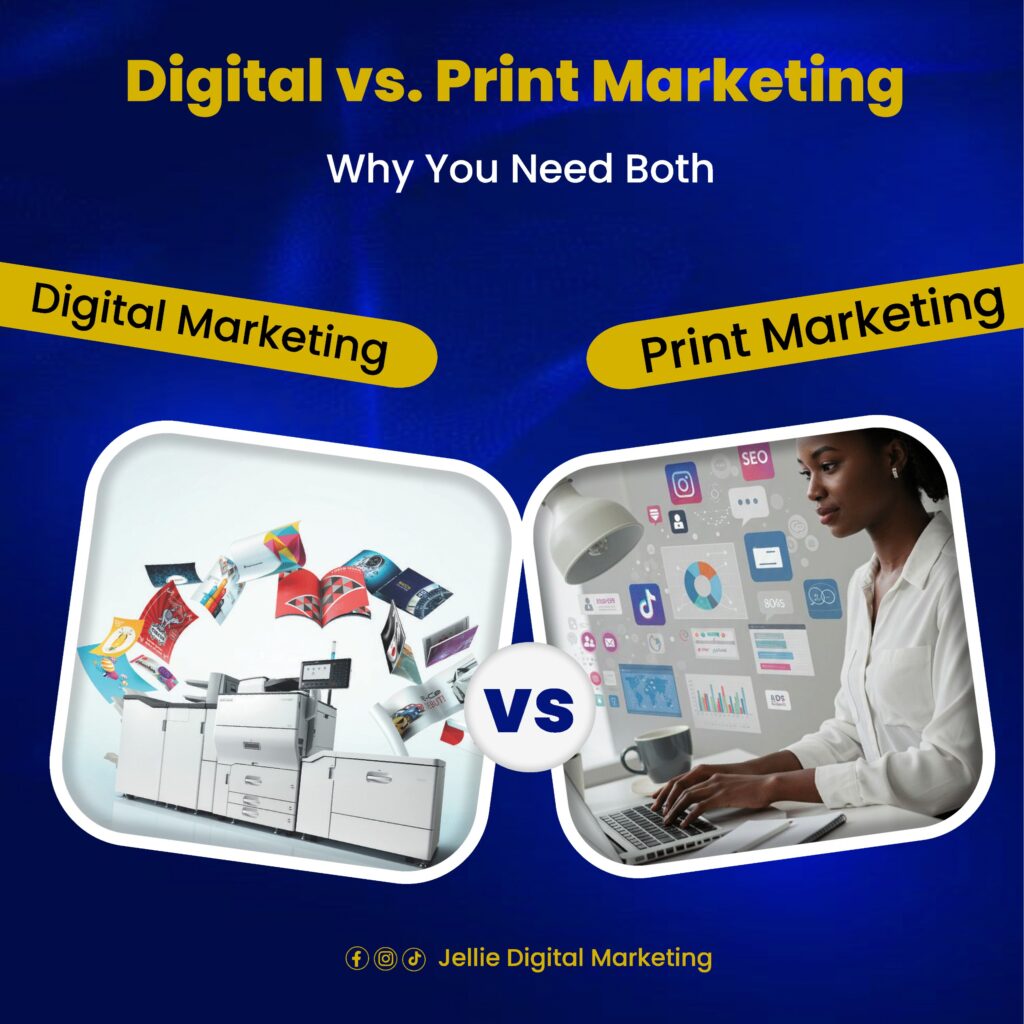
Digital vs. Print Marketing || Why You Need Both
Introduction
Digital marketing has transformed the way businesses communicate, advertise, and sell. From social media and websites to email campaigns and online ads, digital platforms offer speed, reach, and data-driven decision making. However, despite the digital boom, print marketing still holds immense power. Physical materials create a tangible connection that digital alone cannot replace.
The most successful brands today do not choose between digital and prin, they strategically combine both. When used together, these two approaches reinforce each other, expand brand visibility, and create stronger customer recall. In this article, we explore why both digital and print marketing matter, how they complement each other, and how businesses can leverage both for maximum impact.
What You’ll Learn in This Post
Benefits of Digital Marketing
Digital marketing allows businesses to reach large audiences quickly and cost-effectively. Through platforms such as social media, websites, search engines, and email, brands can communicate instantly with their customers, promote products in real time, and adjust campaigns based on performance.
One of the greatest strengths of digital marketing is measurability. Businesses can track impressions, clicks, conversions, engagement, and customer behavior. This data makes it easier to understand what works, what doesn’t, and how to improve campaigns for better results.
Digital marketing also allows for precise targeting. Ads can be tailored based on age, location, interests, and behavior. This ensures businesses reach the right audience with the right message. Additionally, having a strong online presence through a professional website and active social media platforms builds credibility and makes it easier for customers to find, research, and engage with a brand.
Benefits of Print Marketing
Print marketing offers something digital cannot fully replicate — physical presence. Flyers, brochures, banners, business cards, and branded merchandise give customers something they can touch, keep, and remember. This tangibility builds trust and professionalism, especially in markets where personal connection still matters deeply.
Printed materials often feel more permanent and credible. A well-designed brochure or business card suggests legitimacy and seriousness. Print also performs exceptionally well in local marketing, events, offices, and exhibitions where face-to-face interaction is key.
Print marketing is less fleeting than digital ads. A flyer on a desk, a banner outside a business, or branded packaging continues to communicate long after it is received. This physical visibility reinforces brand recall and strengthens the emotional connection between the business and the customer.
How Combining Both Increases Brand Recall
When customers see your brand both online and offline, recognition increases significantly. Digital platforms create awareness and engagement, while print reinforces memory and trust. Seeing the same colors, logo, messaging, and style across platforms builds consistency, and consistency is what creates strong brands.
For example, a customer might first see your business on Instagram, then receive a flyer, visit your website, and later attend an event where they see your banner. Each interaction strengthens familiarity. This multi-channel exposure increases the chances of conversion and long-term loyalty.
Hybrid strategies also allow brands to guide customers from offline to online — for example, QR codes on flyers leading to websites or social pages. This seamless connection between print and digital creates a complete brand experience.
Real-World Examples of Hybrid Campaigns
Successful brands often integrate digital and print effortlessly. Restaurants use printed menus with QR codes linking to online ordering. Event companies promote digitally but rely on banners, tickets, and merchandise on the ground. Retail brands use social media ads supported by in-store posters, branded packaging, and loyalty cards.
Even small businesses benefit from hybrid campaigns — distributing flyers while running social ads, or networking with business cards that direct people to websites and portfolios. These combinations multiply brand touchpoints and improve trust.
How Jellie Digital Marketing Bridges Print and Digital
At Jellie Digital Marketing, we specialize in creating cohesive brand experiences across both digital and print platforms. We design websites, manage social media, create digital campaigns, and produce high-quality print materials that all align visually and strategically.
From social media graphics and online ads to flyers, brochures, banners, and branded materials, we ensure every piece of content reflects a unified brand identity. Our integrated approach helps businesses reach customers everywhere — online, in offices, at events, and in everyday interactions.
CTA:
Explore our integrated branding solutions today and let us help you build visibility, consistency, and lasting impact across both digital and print platforms.