Jellie Digital Marketing

Edit Template

Author name: Elizabeth Wanjiru

Uncategorized

The Ultimate Guide to Creating a Consistent Brand Identity

The Ultimate Guide to Creating a Consistent Brand Identity Introduction A brand is not just what you sell — it’s how people recognize and remember you. A consistent brand identity ensures customers instantly associate your visuals, voice, and values with your business. This consistency builds trust, loyalty, and authority. Without a clear brand identity, businesses struggle to stand out. With one, they become recognizable, credible, and memorable. This guide explores the building blocks of brand identity, the power of consistency, and how businesses can build a strong, unified brand presence. What You’ll Learn in This Post Elements of a Brand Identity A strong brand identity is built on multiple components working together. These include your logo, color palette, typography, imagery, tone of voice, and overall style. Each element plays a role in shaping how customers perceive your business. Your logo acts as the face of your brand. Colors evoke emotions. Typography communicates personality. Imagery tells stories. Tone of voice defines how you speak to your audience. When these elements align, they form a recognizable and trustworthy brand presence. Documenting these elements in a brand guideline ensures consistency across teams, platforms, and materials. How Consistency Drives Recognition and Trust Consistency makes brands memorable. Repeated exposure to the same visuals, messaging, and tone builds familiarity. Familiarity builds trust. Trust drives customer loyalty and purchasing decisions. When customers encounter your brand on social media, your website, packaging, or printed materials, they should experience the same identity. This reliability signals professionalism and credibility. Brands that remain consistent are easier to recall, easier to trust, and more likely to be recommended. Examples of Strong, Consistent Brands Successful brands are instantly recognizable because of consistency. Their colors, tone, and visual language remain stable across years and platforms. Whether global or local, these brands invest in protecting their identity and applying it correctly everywhere. Even small businesses can achieve this impact through strategic branding, cohesive visuals, and disciplined application. Common Branding Mistakes to Avoid Many businesses damage their brand by using inconsistent fonts, colors, messaging, and logo styles. Others copy trends without strategy or fail to document their brand identity. Inconsistency confuses customers and weakens recognition. A lack of guidelines leads to scattered visuals and unprofessional presentation. Avoiding these mistakes is essential for long-term growth. How Jellie Creates Cohesive, High-Impact Brand Identities At Jellie Digital Marketing, we build brands from strategy to execution. We develop logos, brand kits, templates, social media visuals, and print materials that align into one powerful identity. We ensure your brand looks professional everywhere — online, on paper, and in person. Our holistic approach guarantees clarity, consistency, and strong market presence. CTA:Request a brand identity consultation today and let us help you build a cohesive, professional, and memorable brand.
Uncategorized

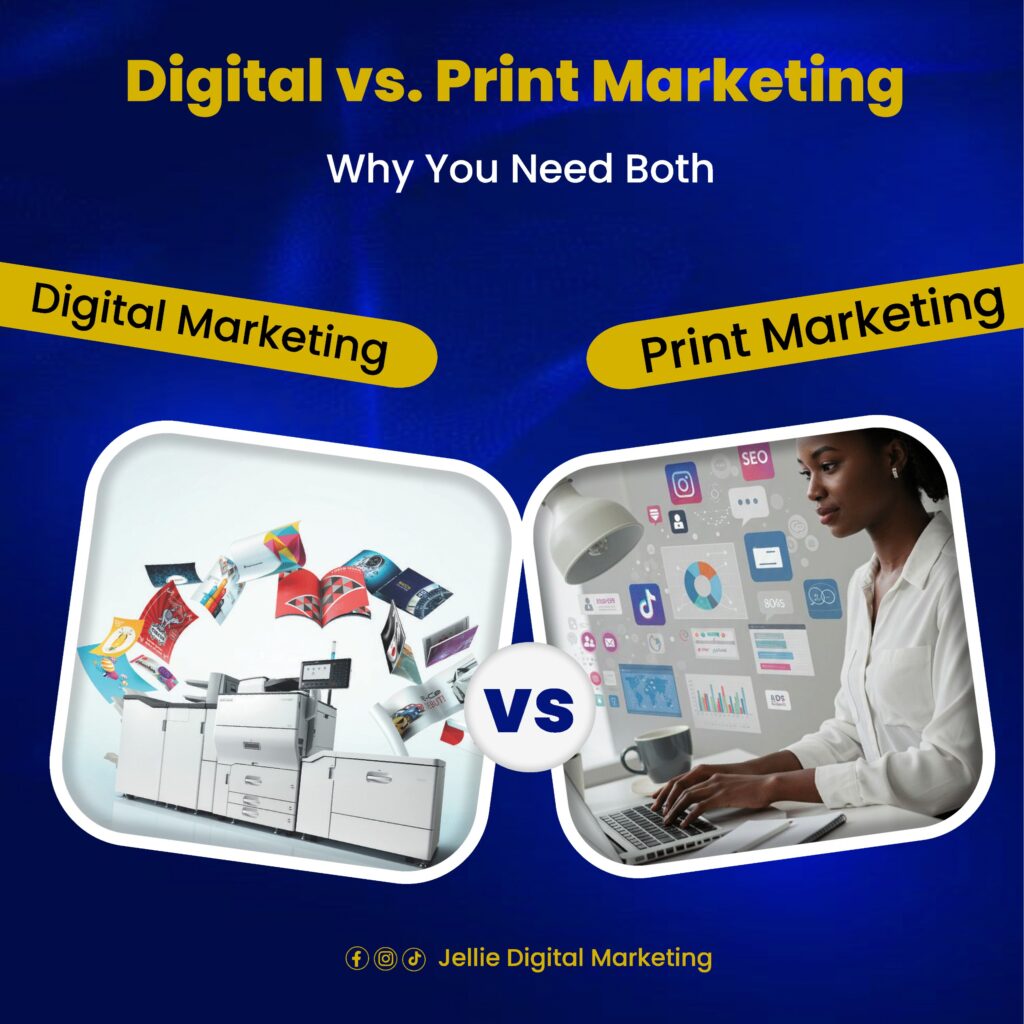
Digital vs. Print Marketing | Why You Need Both

Digital vs. Print Marketing || Why You Need Both Introduction Digital marketing has transformed the way businesses communicate, advertise, and sell. From social media and websites to email campaigns and online ads, digital platforms offer speed, reach, and data-driven decision making. However, despite the digital boom, print marketing still holds immense power. Physical materials create a tangible connection that digital alone cannot replace. The most successful brands today do not choose between digital and prin, they strategically combine both. When used together, these two approaches reinforce each other, expand brand visibility, and create stronger customer recall. In this article, we explore why both digital and print marketing matter, how they complement each other, and how businesses can leverage both for maximum impact. What You’ll Learn in This Post Benefits of Digital Marketing Digital marketing allows businesses to reach large audiences quickly and cost-effectively. Through platforms such as social media, websites, search engines, and email, brands can communicate instantly with their customers, promote products in real time, and adjust campaigns based on performance. One of the greatest strengths of digital marketing is measurability. Businesses can track impressions, clicks, conversions, engagement, and customer behavior. This data makes it easier to understand what works, what doesn’t, and how to improve campaigns for better results. Digital marketing also allows for precise targeting. Ads can be tailored based on age, location, interests, and behavior. This ensures businesses reach the right audience with the right message. Additionally, having a strong online presence through a professional website and active social media platforms builds credibility and makes it easier for customers to find, research, and engage with a brand. Benefits of Print Marketing Print marketing offers something digital cannot fully replicate — physical presence. Flyers, brochures, banners, business cards, and branded merchandise give customers something they can touch, keep, and remember. This tangibility builds trust and professionalism, especially in markets where personal connection still matters deeply. Printed materials often feel more permanent and credible. A well-designed brochure or business card suggests legitimacy and seriousness. Print also performs exceptionally well in local marketing, events, offices, and exhibitions where face-to-face interaction is key. Print marketing is less fleeting than digital ads. A flyer on a desk, a banner outside a business, or branded packaging continues to communicate long after it is received. This physical visibility reinforces brand recall and strengthens the emotional connection between the business and the customer. How Combining Both Increases Brand Recall When customers see your brand both online and offline, recognition increases significantly. Digital platforms create awareness and engagement, while print reinforces memory and trust. Seeing the same colors, logo, messaging, and style across platforms builds consistency, and consistency is what creates strong brands. For example, a customer might first see your business on Instagram, then receive a flyer, visit your website, and later attend an event where they see your banner. Each interaction strengthens familiarity. This multi-channel exposure increases the chances of conversion and long-term loyalty. Hybrid strategies also allow brands to guide customers from offline to online — for example, QR codes on flyers leading to websites or social pages. This seamless connection between print and digital creates a complete brand experience. Real-World Examples of Hybrid Campaigns Successful brands often integrate digital and print effortlessly. Restaurants use printed menus with QR codes linking to online ordering. Event companies promote digitally but rely on banners, tickets, and merchandise on the ground. Retail brands use social media ads supported by in-store posters, branded packaging, and loyalty cards. Even small businesses benefit from hybrid campaigns — distributing flyers while running social ads, or networking with business cards that direct people to websites and portfolios. These combinations multiply brand touchpoints and improve trust. How Jellie Digital Marketing Bridges Print and Digital At Jellie Digital Marketing, we specialize in creating cohesive brand experiences across both digital and print platforms. We design websites, manage social media, create digital campaigns, and produce high-quality print materials that all align visually and strategically. From social media graphics and online ads to flyers, brochures, banners, and branded materials, we ensure every piece of content reflects a unified brand identity. Our integrated approach helps businesses reach customers everywhere — online, in offices, at events, and in everyday interactions. CTA:Explore our integrated branding solutions today and let us help you build visibility, consistency, and lasting impact across both digital and print platforms.

Website Design

Top Web Design Trends in 2026 That Will Boost Conversions

Top Web Design Trends in 2026 That Will Boost Conversions Introduction Web design is no longer just about aesthetics; it directly affects user trust, engagement, and sales. As user behavior changes and technology advances, websites must evolve to meet higher expectations. A modern website must be fast, mobile-friendly, visually appealing, and strategically designed to guide users toward action. In 2026, businesses that embrace modern web design trends will not only look more credible but will also convert more visitors into customers. Let’s explore the key web design trends shaping the future and how they can dramatically improve website performance. What You’ll Learn in This Post Minimalist & Clean Designs Modern users want clarity. Minimalist web design removes unnecessary clutter and focuses on what truly matters: content, usability, and calls to action. Clean layouts improve navigation, reduce distractions, and help users find information quickly. Whitespace, simple color schemes, clear typography, and strong visual hierarchy make websites easier to scan and more pleasant to use. This improves user experience and keeps visitors on the site longer, increasing the likelihood of conversions. Minimalism also improves website speed, which is critical for both user satisfaction and search engine ranking. Faster websites reduce bounce rates and build trust instantly. Mobile-First and Responsive Design The majority of internet users now browse on mobile devices. In 2026, mobile-first design is not optional, it is fundamental. Websites must adapt seamlessly to all screen sizes, ensuring consistent functionality and appearance. Google prioritizes mobile-friendly websites in search results, making responsive design essential for SEO. A mobile-optimized site improves accessibility, user satisfaction, and discoverability. Touch-friendly navigation, fast loading times, and readable content on small screens directly influence whether users stay, engage, or leave. Businesses that fail to prioritize mobile design lose both traffic and credibility. Interactive Elements Interactive elements such as animations, hover effects, sliders, and micro-interactions make websites more engaging and intuitive. These features guide users, highlight actions, and provide visual feedback that enhances usability. Interactive call-to-action buttons, animated transitions, and subtle motion design capture attention and create a more dynamic experience. When used correctly, interactivity encourages exploration and increases time spent on a site, both strong indicators of conversion potential. However, interactivity must be purposeful. Overuse can overwhelm users, but strategic implementation improves storytelling, navigation, and brand perception. Personalized and AI-Driven Experiences Modern websites are becoming smarter. AI-driven features such as chatbots, dynamic content, and personalized recommendations improve customer experience by offering relevant information instantly. Personalization allows websites to adapt content based on user behavior, location, and interests. This creates more meaningful interactions and increases engagement and conversions. Chatbots provide 24/7 assistance, improve lead generation, and enhance customer support. As automation advances, businesses that integrate intelligent tools gain a competitive advantage. How Jellie Implements Cutting-Edge Design Trends At Jellie Digital Marketing, we design websites with both beauty and performance in mind. We focus on user experience, conversion optimization, mobile responsiveness, and modern aesthetics. Our process combines strategic planning, clean design, interactive elements, and SEO-friendly structure to ensure each website supports business growth. We don’t just build websites, we create digital platforms designed to attract, engage, and convert. CTA:Upgrade your website with modern design trends and let us help you turn visitors into loyal customers.

Uncategorized

Social Media Mistakes Small Businesses Make (And How to Avoid Them)

Social Media Mistakes Small Businesses Make (And How to Avoid Them) IntroSocial media is one of the most powerful tools for business growth, yet many small businesses struggle to use it effectively. Posting inconsistently, ignoring engagement metrics, or focusing too heavily on sales are just a few common mistakes that can cost you followers, credibility, and potential revenue. In this article, we’ll explore the most common social media mistakes small businesses make and provide actionable strategies to avoid them — helping your business grow, connect with your audience, and get measurable results. What You’ll Learn in This Post Posting Inconsistently or Without Strategy Inconsistent posting can make your brand appear unreliable and disengaged. Audiences expect regular content and engagement, and sporadic updates may cause you to be forgotten. Planning a content calendar ensures that your posts are timely, relevant, and aligned with your brand goals. Ignoring Analytics and Engagement Metrics Without tracking metrics like impressions, clicks, engagement rate, and follower growth, it’s impossible to know what’s working. Analytics guide better decision-making, helping you refine content, improve performance, and reach the right audience more effectively. Overly Promotional vs. Value-Driven Content Many businesses make the mistake of posting too many sales messages, which can alienate their audience. A healthy balance of tips, storytelling, and informative content builds trust and engagement while subtly promoting your products or services. Providing value keeps your audience coming back for more. The Importance of Visuals and Branded Graphics Social media is highly visual. Consistent colors, fonts, and style create a recognizable brand, while high-quality graphics and visuals capture attention and increase engagement. A cohesive visual identity ensures your posts are instantly identifiable and professional. How Jellie Digital Marketing Manages Social Media for Growth At Jellie, we take a holistic approach to social media management. From content creation and scheduling to community engagement and ad campaigns, we ensure your social platforms are optimized for growth. Our strategies are data-driven and focused on measurable results, including increased followers, higher engagement, and more qualified leads. CTA:“Let us handle your social media so you can focus on running your business. Contact us today to boost your online presence and grow your brand effectively.”

Uncategorized

How Strong Branding Helps Your Business Stand Out

How Strong Branding Helps Your Business Stand Out Intro Branding is more than just a logo or a color palette it’s the personality, identity, and promise of your business. Strong branding sets your business apart in crowded markets, builds lasting customer loyalty, and ensures your audience recognizes and trusts you instantly. In today’s competitive business environment, consistent and strategic branding isn’t optional — it’s essential for growth, credibility, and long-term success. What You’ll Learn in This Post What Makes a Brand “Strong” Today A strong brand is consistent, relevant, and clear in its messaging. It communicates your business values and connects with your audience emotionally. Strong brands maintain coherence across every touchpoint, from social media and websites to packaging and offline materials ensuring your audience knows exactly who you are and what you stand for. The Psychology of Colors, Typography, and Visuals Visual elements influence perception more than most businesses realize. Colors evoke emotions and influence decision-making, typography communicates professionalism and tone, and imagery tells your brand story. Choosing the right combination ensures your brand resonates with your target audience and remains memorable in their minds. How Consistent Branding Drives Customer Trust Consistency is key to recognition and loyalty. Repeated exposure to your brand’s visuals, messaging, and tone reinforces your business identity and builds trust over time. Logo placement, tone of voice, and cohesive visuals across platforms create a sense of reliability, professionalism, and credibility that keeps customers coming back. Real-Life Examples of Effective Branding From global brands to local success stories, consistency and creativity make a huge difference. Showcasing before-and-after brand transformations illustrates the power of professional branding. This section can include mini case studies of businesses that successfully elevated their visibility, credibility, and customer engagement through strong branding. How Jellie Digital Marketing Crafts Memorable Brands At Jellie, we take a holistic approach to branding. We combine strategy, visual design, and messaging to create cohesive, high-impact brand identities. Our services include logo design, brand identity kits, social media graphics, and complete visual branding solutions — all tailored to your unique business goals. We don’t just design; we craft brand experiences that connect, resonate, and drive results. CTA:“Book a free brand consultation today and let us help you create a consistent, memorable, and high-impact brand that stands out in your industry.”

Uncategorized

Why Every Business Needs a Professional Website in 2026

Why Every Business Needs a Professional Website in 2026 Intro:A website is the backbone of a business’s online presence. It’s more than just a digital brochure — it builds credibility, showcases services, and helps convert visitors into customers. What You’ll Learn in This Post CTA:Contact us to audit your website and take the first step toward a stronger digital presence.

Scroll to Top